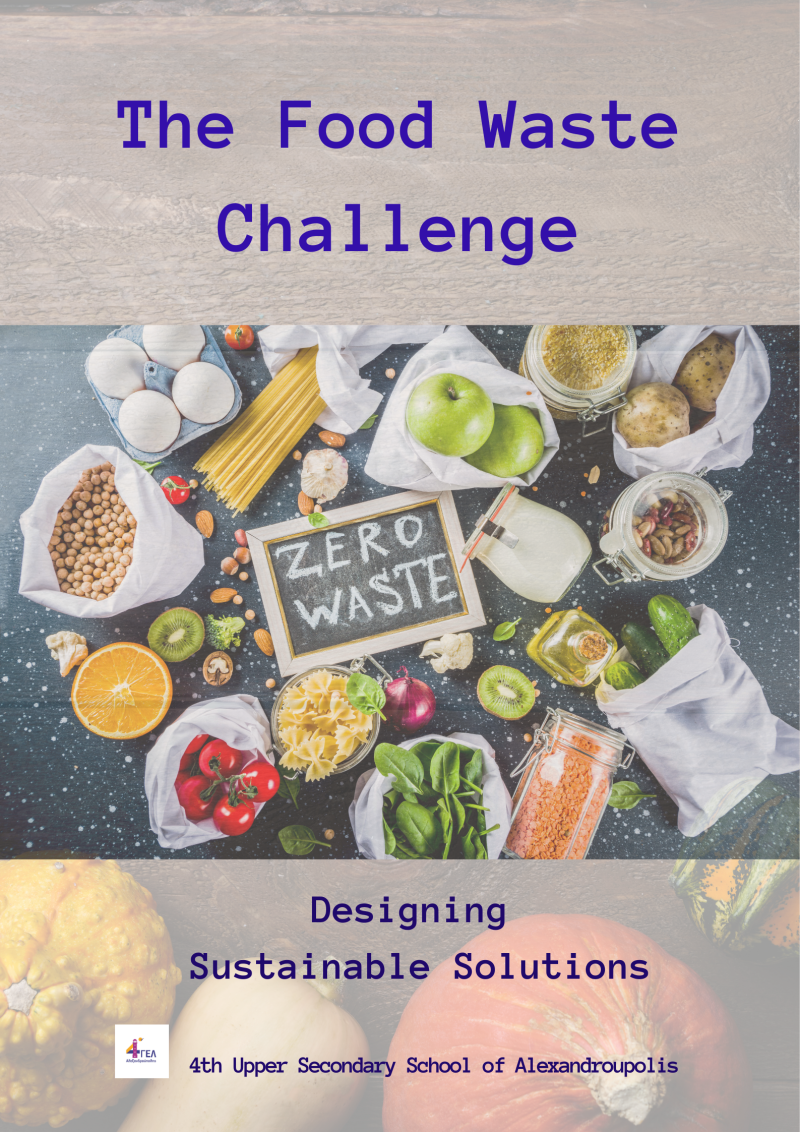
The Food Waste Challenge: Designing Sustainable Solutions


menu

Εφαρμοσμένα σενάρια/καινοτόμα προγράμματα
Το 4ο Γενικό Λύκειο Αλεξανδρούπολης αποτελεί έναν πρότυπο εκπαιδευτικό οργανισμό του Έβρου, που διακρίνεται για την έντονη εξωστρέφεια και τον ευρωπαϊκό του προσανατολισμό. Μέσα από τη συστηματική συμμετοχή σε καινοτόμα προγράμματα, όπως το Erasmus+ και τις δράσεις Jean Monnet, το σχολείο υπερβαίνει τα στενά όρια της παραδοσιακής διδασκαλίας. Ως ενεργό Σχολείο-Πρεσβευτής του Ευρωπαϊκού Κοινοβουλίου (EPAS), καλλιεργεί στους μαθητές δεξιότητες κριτικής σκέψης, ψηφιακού εγγραμματισμού και δημοκρατικής συνείδησης, προετοιμάζοντάς τους για τις προκλήσεις της σύγχρονης Ευρώπης. Η φιλοσοφία της σχολικής κοινότητας εστιάζει στη διαμόρφωση ενεργών πολιτών που συνδέουν τη θεωρητική γνώση με την κοινωνική πράξη. Η συνεπής συμμετοχή στον θεσμό Bravo Schools και η δέσμευση στους 17 Παγκόσμιους Στόχους Βιώσιμης Ανάπτυξης, με έμφαση στον Στόχο 11, αποδεικνύουν το όραμα για μια κοινωνία που σέβεται την ιστορική της ταυτότητα. Η ανάδειξη της αρχιτεκτονικής κληρονομιάς της περιοχής μας μέσα από μαθητικές δημιουργίες αποτελεί χαρακτηριστικό παράδειγμα αυτής της ολιστικής προσέγγισης. Τέλος, το 4ο ΓΕΛ λειτουργεί ως γέφυρα μεταξύ της τοπικής κοινωνίας και της διεθνούς πραγματικότητας. Αξιοποιώντας σύγχρονα ψηφιακά μέσα και συμμετοχικές παιδαγωγικές μεθόδους, το σχολείο εμπνέει τη νέα γενιά να δράσει ως «πρεσβευτής» αλλαγής. Μέσα από τη διαφύλαξη της συλλογικής μνήμης και την προώθηση των ευρωπαϊκών αξιών, το σχολείο συμβάλλει ενεργά στην οικοδόμηση ενός μέλλοντος που χαρακτηρίζεται από βιωσιμότητα, συμπεριληπτικότητα και κοινωνική συνοχή.
Κανίδου Ζωή
Επικοινωνία με σχολείοThis learning activity engages upper secondary students in exploring the complex issue of food waste and its environmental, social, and economic impacts. Through a combination of flipped classroom methodology, hands-on activities, outdoor learning, and project-based learning, students investigate nature-based solutions (NBS) for food waste reduction. They research various NBS, investigate local food waste practices, and develop and potentially implement projects to address food waste within their school or community. Assessment is multifaceted, incorporating project work, teamwork evaluation, questionnaires, debates, and class discussions, fostering critical thinking, collaboration, and a sense of agency in creating sustainable solutions.
The lesson culminated in student-developed projects addressing food waste, ranging from composting systems to awareness campaigns, demonstrating their understanding of NBS and their ability to apply them practically. Beyond the tangible projects, the lesson aims to foster environmentally conscious and active citizens equipped to tackle sustainability challenges.
With
1/ parents/guardians
2/ local community

This learning activity directly aligns with SDG 12 by fostering sustainable consumption and production patterns. Students actively engage in understanding and mitigating food waste, a critical component of sustainable consumption. By researching nature-based solutions and analyzing local practices, they gain practical knowledge of reducing waste at its source. The project-based approach empowers them to develop and implement tangible solutions, promoting responsible production and consumption within their community. The multifaceted assessment ensures students grasp the interconnected environmental, social, and economic dimensions of food waste, cultivating a generation equipped to drive sustainable change.
στο τηλέφωνο 210 –
6898593
ή email [email protected]